Model-based design for embedded control software
Models an AI agent writes, an engineer reviews, and overTview proves.
AI now writes code faster than anyone can read it. Safety-critical software still needs a person to verify it, so the review moves up a level, to the model, the way it once moved from assembler to C. The agent builds the model with its requirements and tests, you review it, and overTview proves the generated C matches it.
Built by model-based design and AI adoption experts.Hire us
See it work.
A system described in plain words, the model the agent builds from it, the review in the editor, and the proof that the C does what the simulation did.
Rather see it on one of your own models?Get in touch
The next level of abstraction
You stopped reading the assembler long ago.
Once compilers wrote the assembler, engineers stopped reading it and checked the C instead. AI is the same kind of shift: it writes far more code than anyone can read line by line, yet safety-critical software still needs a person who verifies what it does.
Model-based design has offered a level above the C for decades: a diagram an engineer can follow, with the C generated from it. With AI doing the writing, the review moves up to that level, and that takes a tool built for it: one the agent works in quickly and an engineer checks easily.
10110000 01100001Machine codeYou write it and check it, bit by bit.
mov al, 61hAssemblerAn assembler writes the machine code. You read the assembler.
u = kp * e + ki * x;CA compiler writes the assembler. You read the C.
- The model
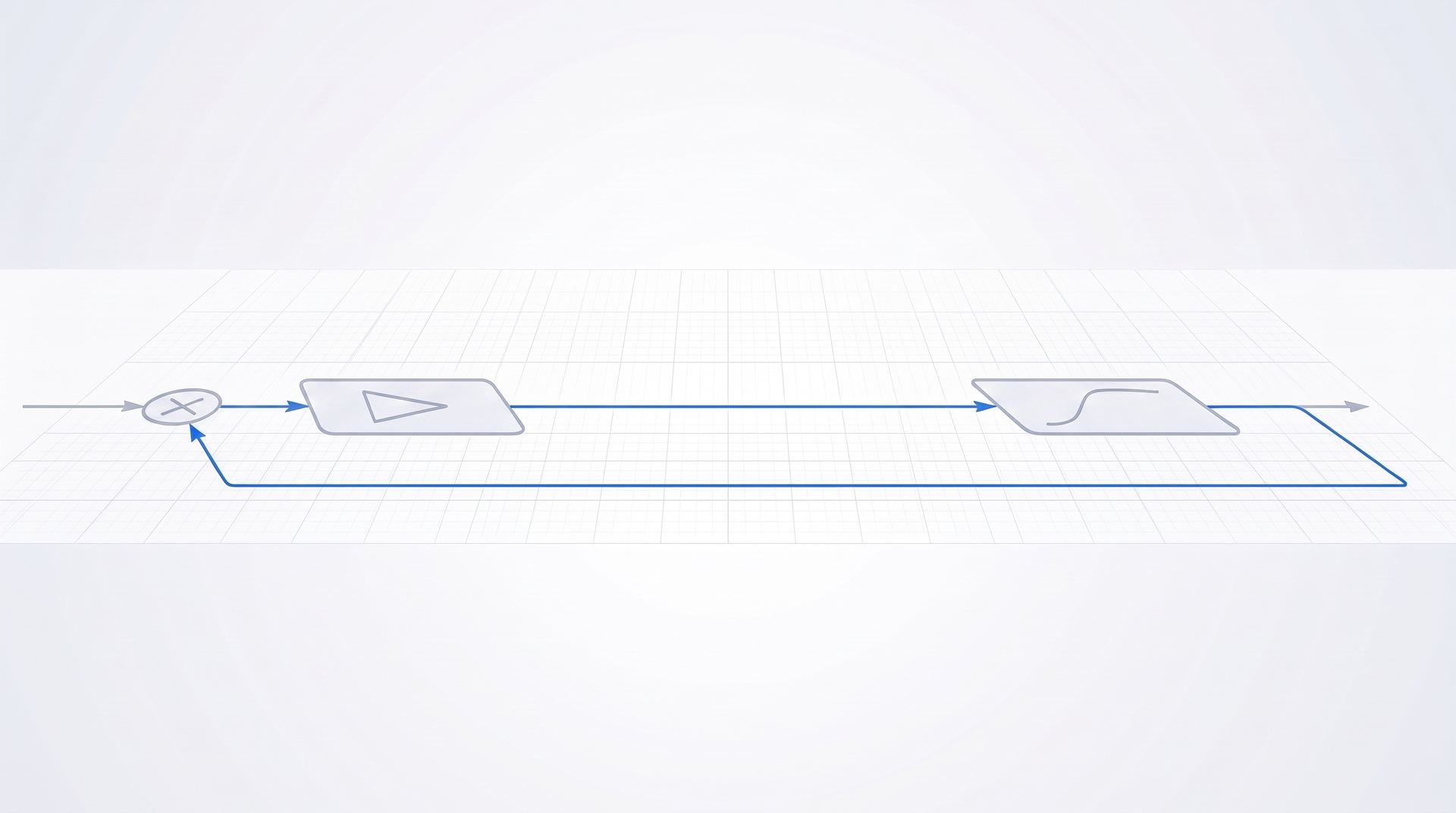
The agent writes it, and overTview writes the C and proves it matches. You review the model.
An AI engineer, built in
You work with the agent.
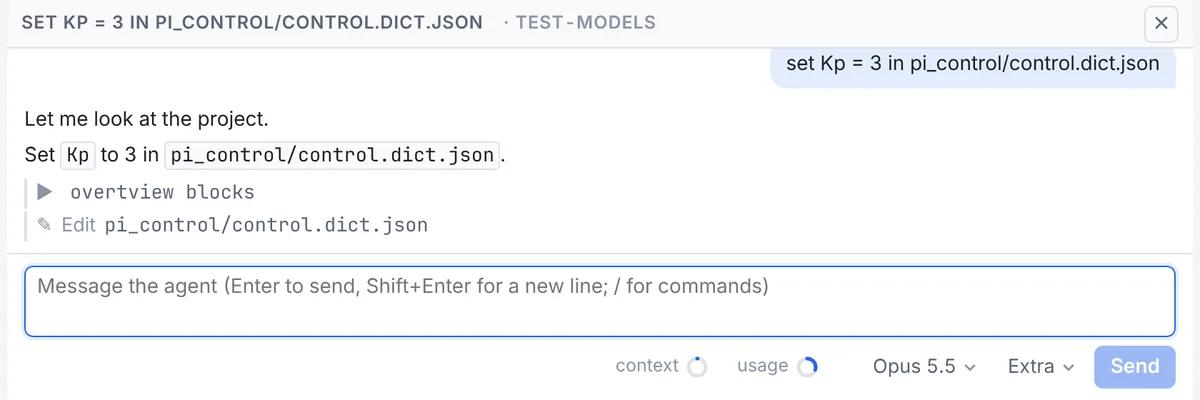
Describe the system in plain words, in the chat panel of the editor. The agent builds the whole model and runs its tests. Ask for a change, and it makes it, runs the tests again and regenerates the C, while the diagram in front of you follows. Reach for the mouse when a click is quicker than a sentence.
Bringing AI agents into your team's model-based design?Hire us to help
How it works.
1The agent writes it
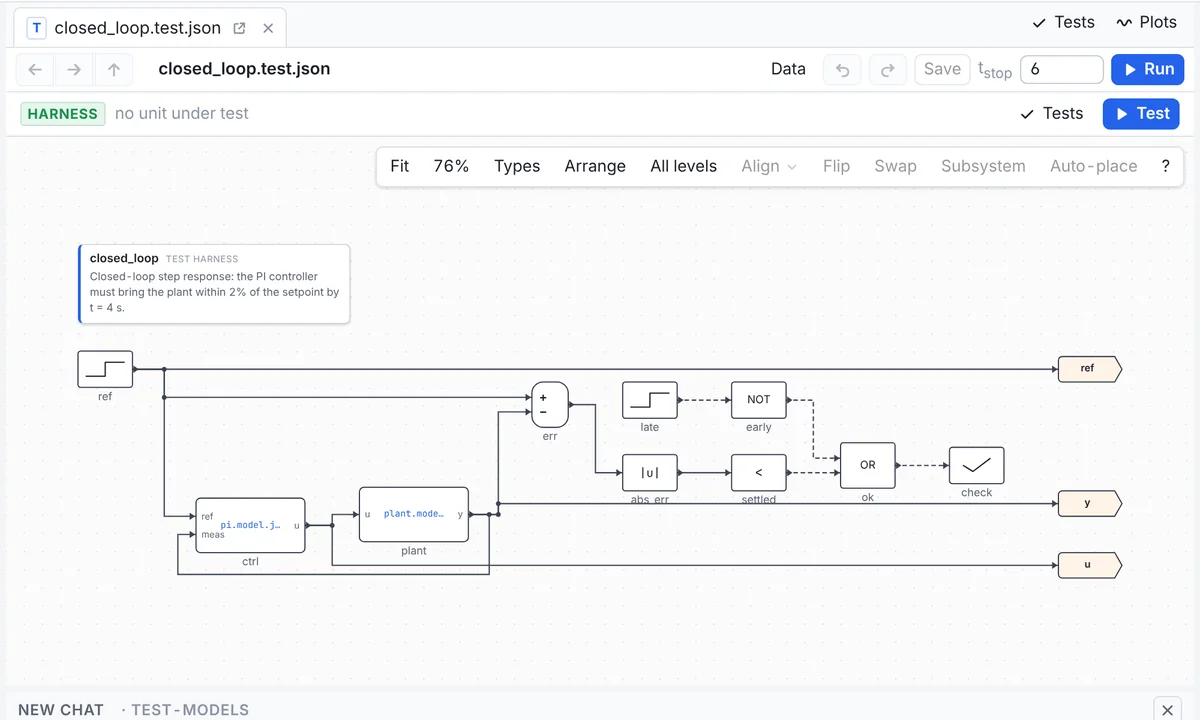
From your description it builds the controller with its state machine, the parameters, the requirements and the tests. Then it runs them.
2You review it
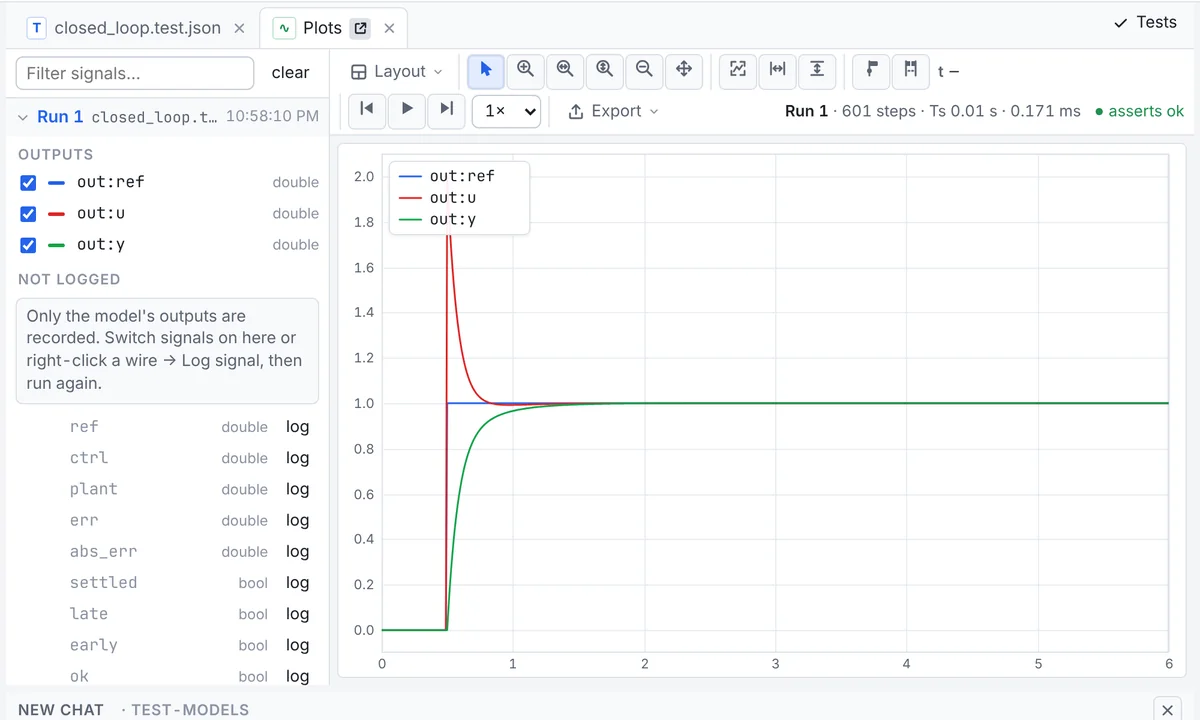
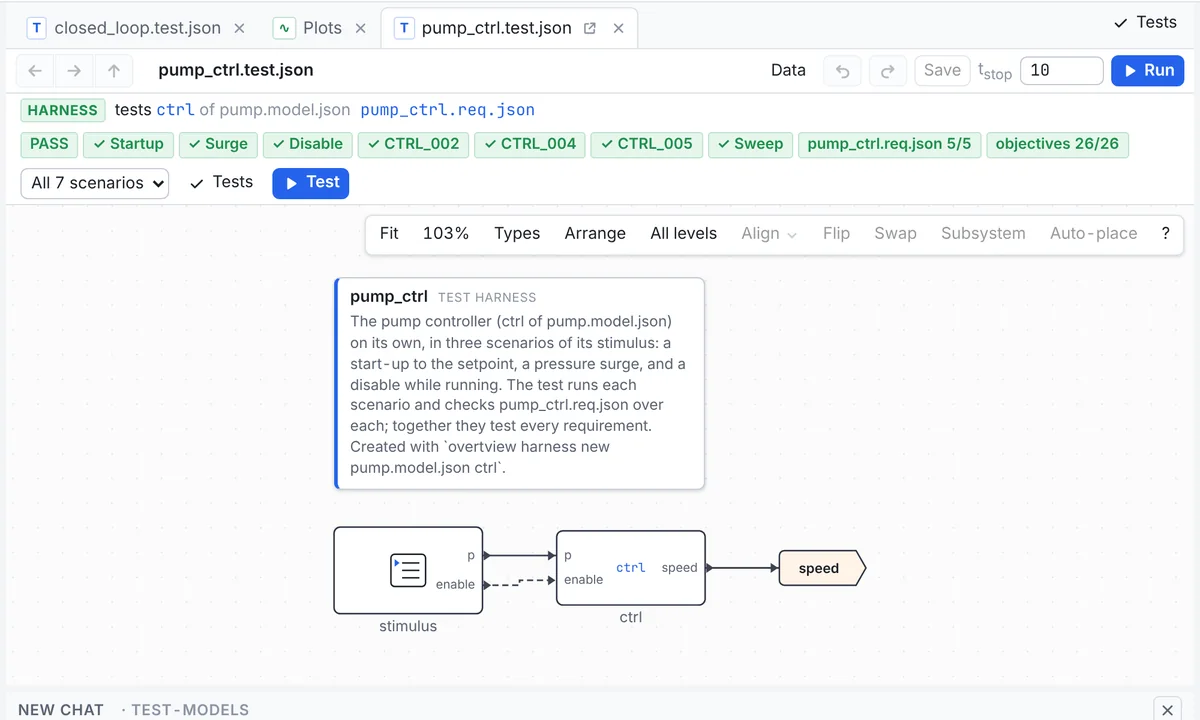
You review the model, not the C: the diagram, the plots with cursors and statistics, and every scenario and requirement in one table. Nothing is hidden, and you change anything by hand.
3overTview proves it
Every simulation checks the requirements, and when one fails, it shows when and why. Change the design, and within seconds you know what broke. Fix it, and the generated C is proven to behave exactly like the simulation, so you read it when you choose to, not after every change.
Want to try it on your controller?Get in touch
The team
We taught model-based design for a living.
We have spent our careers on model-based design: teaching it at university during our doctorates, training engineering teams on the tools everyone uses, and then building production models and code with those teams on deadlines. We know where the established tools slow a team down because we were the ones called in when they did. Today we work for ourselves: on overTview, and with the teams that hire us.

Örs Márton, PhD
Co-founder
Örs spent twelve years as the Simulink expert teams call: first as the application engineer who showed hundreds of engineering teams what model-based design can do, then as a consultant building their models and production code with them. overTview is the tool he wanted on every one of those projects.

Dániel Szabó
Co-founder
Dániel trained engineers on the whole Simulink toolchain, from the first block diagram to production code generation, AUTOSAR components and real-time testing on hardware. Then he moved into their projects, first as an application engineer, then as the architect of embedded control and signal-processing systems for well-known engineering companies. He knows what a model has to carry from the first sketch to the reviewed code.
Model-based design and AI adoption experts
Hire us, too.
We take on consulting work: model-based design in Simulink, from architecture to production code and testing, and moving a team's model-based design to AI agents, with or without overTview.
Questions.
What if the agent gets it wrong?
You see it: the diagram, the plots and every requirement's result are there to review. Fix it by hand, or tell the agent, and run the tests again.
Do we still have to read the C?
You can: it is plain C that traces back to the model. But you don't have to read it after every change, because it is checked against the model you reviewed and has to match it exactly.
Does it run in the cloud?
No. overTview runs on your machine, and your models stay in your repository. Only the chat talks to the language model behind the agent.
Can we bring the models we already have?
Yes. overTview reads and writes existing block diagrams and state machines, bit for bit, so existing projects come along.
Can we hire you instead of buying a tool?
Yes. We consult on model-based design in Simulink, from architecture to production code and testing, and on bringing AI agents into a team's work, with or without overTview. Hire us →
Let's talk about your models.
Tell us what you build and which tools your team uses today. We show you overTview on one of your own models and stay in the loop while you evaluate it, or we work on your models with you as consultants.